

Organic Vineyard Management, part 3: Weed Control
This is part 3 in a series about organic vineyard management.
Part 3: Biointensive Weed Control and Regenerative Farming
Co-owner & Vineyard Manager Paul Brock is fond of saying “there are no weeds in our vineyard… only cover crops.” To us, a vineyard floor without green growth signals a dead ecosystem. A diverse group of plants growing alongside grape vines prevents soil erosion and builds organic matter to feed the important microorganisms in the soil.
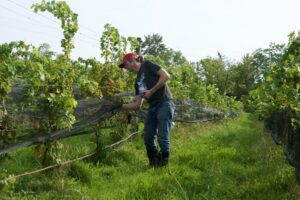
Late in the growing season, we tolerate more weeds growing under the vines.
When are weeds a problem?
Weeds can be a problem when they compete with vines for water and soil nutrients. Weeds that grow too close to the trunks can provide a haven for rodents that like to gnaw and damage them. When left unmanaged, weeds can also grow up into the fruiting zone of vines and shade the fruit.
How do you manage weeds?
It is not uncommon for vineyards to spray chemical herbicides to manage weeds. Synthetic herbicides, such as glyphosate, are cheap and effective. They also pose health risks to humans and kill many of the beneficial microbes and fungi in the soil. At Silver Thread, we do not use herbicides. Instead, we use mechanical methods like tilling, mowing and trimming to manage weeds.
Early in the growing season, usually during April and May, we till the soil around the vines to knock back the weeds. Reducing weed competition is most important at the start of the growing season when the vines are flowering and setting fruit. We also till at the end of the growing season, usually in November, to reduce weed pressure before the next growing season begins. Our tractor has tilling attachments, but we also use good old-fashioned hand hoes.
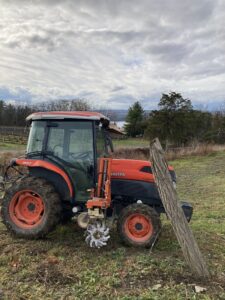
The star attachment uproots weeds near the base of the vines.
We mow and trim weeds during the summer when they get tall. This prevents the weeds from shading the fruit. We are careful to alternate which rows get mowed to maintain a continually flowering vineyard floor for pollinators and other beneficial insects.
Are there any bioherbicides?
In this series, we have explained the three main challenges to Finger Lakes grape growing: fungal diseases, insect pests, and weeds. For fungal and insect pests, we described how we use biopesticides to fight disease. Unfortunately, there are not any bioherbicides at this point. We have experimented with a couple of organic herbicides, such as highly concentrated vinegar, but they have not been effective to fight weeds in our vineyard.
What is regenerative farming?
Silver Thread is a regenerative farm, which means we focus on making our soil as healthy and alive as it would be if we weren’t farming grapes in it. In addition to keeping our soil covered with native vegetation, we feed our soil with homemade compost. Our well-aged blend of chicken manure, grape skins and stems, and wood chips is made with ingredients from the farm. Allowing plants to grow across the vineyard floor is essential in a regenerative system.
