

Organic Vineyard Management, part 1: Fungal Disease
This is part 1 in a series about organic vineyard management.
Part 1: Biointensive Control of Fungal Disease
Mildews and other fungal infections are the primary hazard of grape growing in the Finger Lakes. Several diseases are always present in the region, and they will infect the shoots, leaves, trunks and fruit of the vine—even in a dry year. In other words, no-spray (another form of organic farming) isn’t a viable option for Finger Lakes viticulture. Without help, the vines would fail to produce fruit.
What is a Biofungicide?
Biological disease control is the great new frontier in agriculture. Many certified organic (i.e. naturally-derived) biofungicides (substances that control fungal disease) have emerged in the past 15 years, and Silver Thread has been a leader in learning how to use them. Biofungicides are generally plant extracts, fermentation extracts or active live cultures. Their mode of action is very different than conventional pesticides—they primarily work by triggering an immune response in the plant, helping the plant fight off disease on its own.
How do Biofungicides Work?
An analogy with human health might explain: When people get sick, some immediately call the doctor and ask for prescription medicine to kill the bacteria or virus that is causing the symptoms. Synthetic pesticides are a lot like pharmaceuticals—they kill the pathogen, but remain in the environment and cause side effects. Other people stay healthy and prevent getting sick in the first place by eating well, getting enough sleep, and exercising. Using biopesticides is like eating foods high in probiotics, fiber, protein and vitamins.
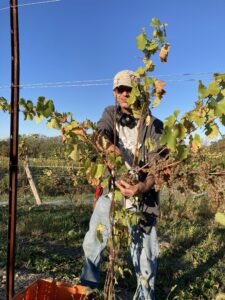
Phil hand-picking young Riesling grapes in our organically-farmed Good Earth Block.
What are some examples of Biofungicides?
We use many different biofungicides, and new ones are becoming available every year. Here are a few examples to illustrate what they are and how they work. Regalia is a biofungicide made from extracts of the giant knotweed plant. It is effective against powdery mildew and botrytis. Stargus is an active live bacterial culture that competes with pathogens on the plant surface. When sprayed together with Regalia, Stargus provides protection from black rot. Warhammer’s active ingredient is derived from chitin, a natural substance found in the shells of crustaceans like shrimp and crabs that help them prevent disease. This material has been a game changer in the fight against downy mildew.
Are Biofungicides Organic?
These biofungicides, plus the others we use, are certified organic by OMRI (Organic Materials Review Institute) because they are made from naturally occurring substances. They have very low toxicity, so people can re-enter the vineyard shortly after they have been sprayed.
We began using biofungicides ten years ago. It hasn’t been easy or inexpensive, and we’ve experienced many setbacks. But we remain committed to cracking the code of organic farming, and we’re inspired by the quality and purity of fruit we’re growing using these methods.
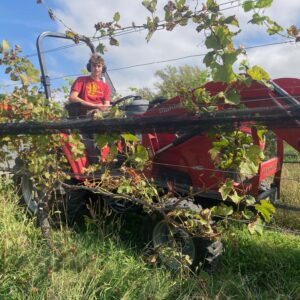
Shannon and Paul’s son, Trey, driving a tractor in the vineyard.
